What third party boat insurance covers
Third party boat insurance — sometimes referred to as liability only cover — protects you financially when your boat causes damage or injury to other people or their property. The core coverage typically includes:
- Damage to other vessels: If your boat collides with, drifts into, or otherwise damages another boat, your third party cover pays for the repair or replacement of the other vessel up to the policy limit.
- Injury to third parties: If someone is injured as a result of your boat — a swimmer struck by your propeller, a guest on another boat hurt in a collision — third party cover responds to the resulting liability claim.
- Damage to marina infrastructure: Pontoons, berths, harbour walls, and navigation markers can all be damaged by boats. Third party cover typically includes this type of property damage.
- Legal costs: Defending a liability claim involves legal fees regardless of the outcome. Most third party policies include cover for reasonable legal costs in defending a claim.
- Pollution liability: Some policies include basic pollution liability — for fuel or oil spills caused by the vessel — though this is not universal and limits vary significantly.
What third party insurance does not cover is your own vessel. If your boat is damaged in the same incident, you bear that cost yourself unless you have hull and machinery cover in place.
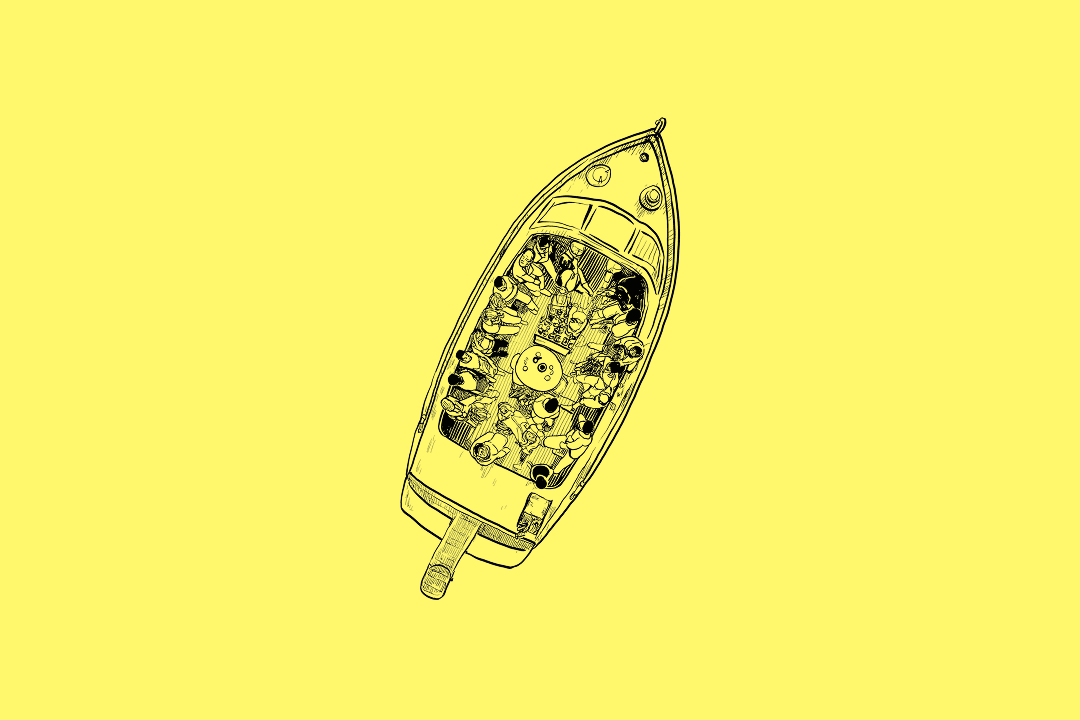
What third party boat insurance does not cover
Understanding the exclusions is as important as understanding the coverage. Third party only policies typically exclude:
- Your own vessel: The most significant gap. No hull damage, no engine failure, no theft, no weather damage to your own boat.
- Your own injury: Personal accident cover for the owner is not included in a third party only product. If you are injured while operating the boat, the policy provides nothing.
- Cargo and personal effects: Equipment, electronics, and personal belongings on board are not covered.
- Racing: Most policies exclude racing unless a specific racing extension is purchased.
- Commercial use: Charter operations and any commercial carrying of passengers are excluded from recreational liability policies.
- Towage: Liability arising from towing another vessel may be excluded or subject to a separate limit.
When third party cover is legally required in the UK
Third party boat insurance is a legal requirement in one specific context in the UK: waterways managed by the Canal & River Trust. To obtain a boat licence for use on CRT waterways — which include most of the English and Welsh canal and river network — you must hold a minimum of £1 million third party liability cover.
On UK coastal waters, tidal estuaries, and offshore, there is no legal requirement to hold boat insurance of any kind. The decision to insure — and at what level — is entirely voluntary from a legal standpoint. However, this legal freedom is significantly constrained in practice by marina requirements and lender conditions.
Most marinas and boatyards require proof of third party liability cover as a condition of a berth agreement. The minimum is typically £2 million, though some require more for larger vessels. Arriving without insurance is not an option if you want a berth.
Is third party only cover enough?
For most boat owners with vessels of any meaningful value, third party only cover is not sufficient. The logic is straightforward: your own boat is likely your most significant asset at risk in any incident, and third party cover leaves it entirely unprotected.
Consider the most common types of marine incident. A collision that is your fault damages both your boat and the other party's vessel. Third party covers the other boat. Your own damage — potentially significant — is entirely uninsured. A storm during a passage damages your boat and forces a salvage operation. No third party is involved; third party insurance pays nothing. Your boat sinks at its mooring overnight. Again, no third party claim; nothing paid. This is precisely what hull and machinery insurance exists to cover — the physical vessel itself.
The practical case for third party only cover is narrow: very low-value boats where the cost of hull insurance exceeds the value of the protection, or boats stored ashore and only launched occasionally where the exposure is minimal. For any boat used regularly on water, and certainly for any financed vessel, comprehensive cover is the appropriate baseline.
Third party cover and financed boats
If your boat is purchased with financing, third party only cover is not an option. Marine lenders require comprehensive hull and machinery insurance as a condition of the loan. The reasoning is direct: the lender's security is the vessel itself. Without hull cover, a write-off or serious damage event destroys the lender's collateral while the loan balance remains outstanding. The full picture of what UK lenders require is in the boat insurance UK guide.
Lenders specifically require that the policy is on an agreed value basis — not a market value or actual cash value basis — and that the insured amount equals or exceeds the loan value. They will also require notation on the policy as an interested party, with a right to be notified before cover is cancelled. None of these requirements can be satisfied by a third party only product.
If you are arranging finance for a boat purchase, budget for comprehensive cover from the outset. Attempting to reduce insurance cost by purchasing third party only is not compatible with the lender's requirements and will prevent the loan from completing.
How much liability cover do you need?
The legal minimum on CRT waterways is £1 million. Most specialist marine insurers consider this inadequate for any meaningful sailing. The recommended levels for recreational use are:
| Context | Recommended minimum liability |
|---|---|
| CRT waterways (legal minimum) | £1 million |
| UK coastal sailing, small vessel | £2 million |
| UK and European coastal, mid-range yacht | £3 million |
| Offshore passages, larger yacht | £5 million+ |
| Charter operations, commercial use | £5 million – £10 million, specialist policy |
The justification for higher limits is straightforward. A serious collision with a high-value vessel in a busy anchorage, combined with injury claims from those aboard, legal costs, and salvage expenses, can rapidly exceed £1 million or even £2 million. Liability insurance is the part of your cover that protects your personal balance sheet from catastrophic loss — the limit should reflect the size of the worst plausible claim, not the minimum required to satisfy marina rules. For a full picture of what a comprehensive marine policy costs, see the boat insurance cost guide, and for an overview of which UK marine insurers offer the strongest liability terms, see the providers guide.
Third party cover protects everyone except you and your boat. For a financed vessel, it is inadequate by definition. For any vessel of meaningful value, it leaves the owner bearing the cost of the most likely incidents uninsured.